How to set up a blind fruit tasting game for adults
· Editorial team newswithbenmiami.com
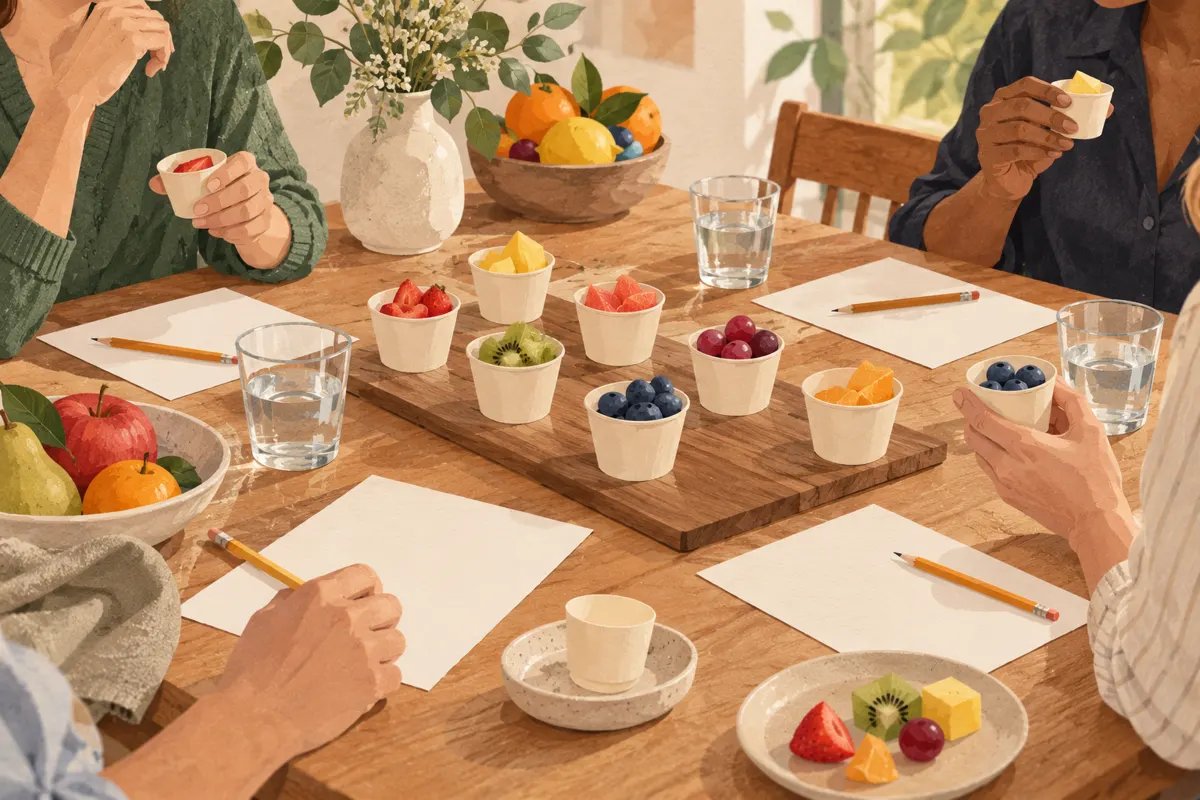
To set up a blind fruit tasting game for adults, prepare bite-size fruit samples, give each one a number and keep the answer key hidden. Have guests taste, write down their guesses and compare answers at the end. The proposed setup below uses familiar fruits, simple notes and one point per correct answer.
Choose a manageable fruit lineup
For a first game, our proposal is six fruits with a mix of textures and flavors. Try apple, pear, banana, pineapple, mango and melon, adjusting the selection to your guests’ preferences and dietary needs. Choose fruit that tastes pleasant on its own; the game should reward observation without making anyone struggle through an unpleasant sample.
Decide how specific an answer must be before preparing anything. For a casual round, “apple” can count without naming its variety. If you include two types of melon, tell guests whether “melon” is enough or whether they must identify each type. Clear rules prevent arguments during the reveal.
- Confirm how many people will taste, then prepare one small portion of each fruit per person.
- Ask about food allergies and dietary restrictions before choosing the lineup.
- Keep ingredients separate and let anyone skip a sample without explanation.
- Save a few extra portions for guests who want another taste before submitting their answers.
Prepare numbered samples and a hidden answer key
The supplied account of a blind beer tasting uses numbered cups, one person serving, written guesses and a final reveal. That structure provides a useful starting point for this proposed fruit version. Choose one host to prepare and serve the samples; that person keeps the answer key and sits out the guessing competition.
- Wash the fruit and use clean utensils and preparation surfaces. Remove pits, hard seeds and any peel you do not intend guests to eat.
- Cut manageable bite-size pieces, keeping portions reasonably similar. Avoid shapes that deliberately preserve an obvious identifying feature.
- Place portions in small dishes or cups marked with numbers. Use the same number for the same fruit for every guest.
- Write a private key matching each number to its fruit. Keep packaging, leftover whole fruit and preparation scraps out of sight.
- Keep prepared fruit refrigerated until serving, and bring out one round at a time.
Decide how much to hide
Hidden names are enough for an easy version, although guests may recognize fruit by color or shape. For a more challenging round, our proposal is to ask players to close their eyes while tasting. Explain the serving process first, and let each person handle their own dish and utensil while seated.
Make blindfolds optional. Guests should know the full ingredient lineup beforehand, especially when dietary restrictions are involved, even though the numbered identities stay secret. Nobody should be surprised with an ingredient or pressured to eat. A player who prefers looking at the samples can still join the conversation and keep their own score.
Run each round with short tasting notes
Give everyone a sheet with one line per sample and spaces for the number, fruit guess, tasting notes and personal rating. Put water and napkins within reach. Before starting, explain that players should record their guesses quietly so one confident answer does not influence the whole table.
- Announce the sample number and hand out the matching portions.
- Invite guests to notice the aroma before taking a bite.
- Ask them to record a few concrete observations: sweet or tart, firm or soft, juicy, crisp, fibrous or creamy.
- Have everyone write a fruit guess and a personal enjoyment rating from one to five.
- Allow another taste if needed, then offer a sip of water before the next sample.
Keep the pace relaxed. Notes can be just two or three words, and the enjoyment rating has no correct answer. Save discussion of possible fruit names until everyone has committed their guess.
Score the guesses and reveal the fruit
Our proposed scoring system gives one point for each correct fruit, using the answer rules announced at the start. Keep enjoyment ratings separate from the competition. If players tie, let them share the win; an extra challenge is unnecessary unless the group wants one.
Reveal the samples in number order and invite guests to explain which clues helped or misled them. Compare favorite fruits as well as correct guesses. Finish by offering any safely stored extra portions with their names visible, so guests can revisit a surprising flavor without another guessing round.