How to photograph food with your phone at an outdoor table
· Editorial team newswithbenmiami.com
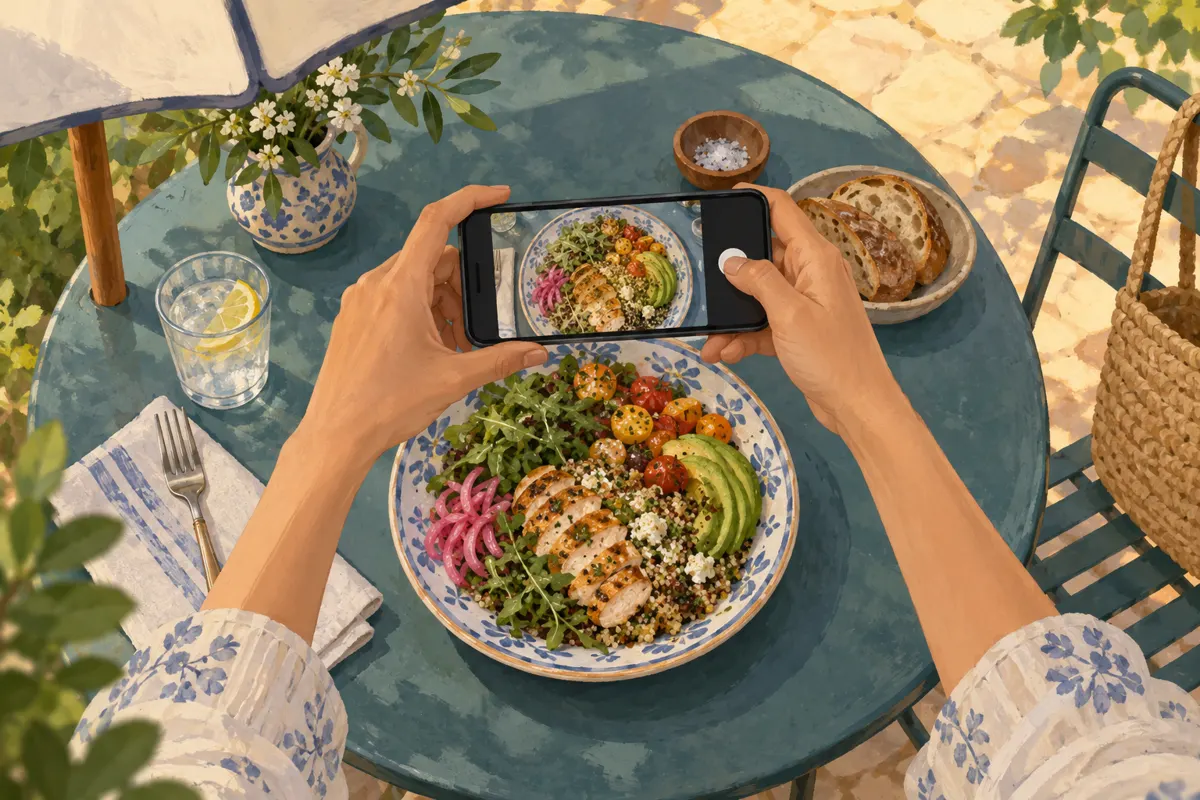
For better outdoor food photos, move the plate into even shade, clear distractions from the frame, tap the food to focus and lower the exposure if bright areas lose detail. Choose an angle that shows the dish’s best feature, take a few pictures and get back to your meal. You can do this with your phone and the space already available at your table.
Find even shade before adjusting the camera
Direct sunlight can leave a white plate glaring while the food’s shaded side looks almost black. Start by looking at the light on the dish itself. An umbrella or another shaded part of the table may give you softer light with less difference between bright and dark areas.
- Move the whole plate into shade; avoid leaving half in sunlight.
- Check for patches of sun filtering through leaves or gaps in an umbrella.
- Let light reach the dish from the side when possible, so its texture remains visible.
- Keep the sun outside the frame and check whether your hand or phone casts a shadow over the food.
Our practical proposal for a crowded patio: slide your own plate toward an evenly shaded patch within reach. If that would disturb another diner’s setting, keep the plate where it is and change your camera position. Leave the flash off; concentrate on making the available daylight work.
Clear only what the camera can see
A busy table does not need a complete rearrangement. Look through the camera and identify what competes with the food: a receipt beside the plate, a bag behind a glass or an unrelated bottle at the edge. Move your own loose items aside, or tighten the frame to exclude them.
Keep a little table surface around the dish so the picture has breathing room. A napkin or fork can stay if it helps the composition, but there is no need to add props. For a low-angle picture, check the background beyond the table too. Shifting the phone slightly may replace a distracting chair or passerby with a simpler background.
Set focus and protect the bright details
Wipe the camera lens with a clean, soft cloth before shooting. Then tap the part of the food you want sharp, such as a cut edge, a topping or the front layer of a sandwich. Check that the camera has focused on the meal rather than a nearby glass.
- Frame the dish and tap the food to set focus.
- Find the exposure control in your camera app. Its appearance and operation vary by phone.
- Reduce brightness slightly if the plate, sauce or pale ingredients look washed out.
- Take a picture and inspect both the brightest area and the shaded food.
- If preserving the highlights makes the food too dark, look for more even shade and try again.
Avoid brightening every outdoor shot automatically. In harsh sun, a slightly darker capture can make highlights less overpowering. The aim is visible detail, not the brightest possible image.
Choose an angle that shows the food
- Overhead: use it for pizza, salads and broad platters when the interesting ingredients are visible from above.
- About 45 degrees: start here for bowls, pasta and dishes that benefit from showing both their surface and height.
- Near table level: try it for burgers, layered cakes and tall drinks to reveal layers or garnishes.
For an overhead shot, keep the phone parallel to the tabletop and use the camera grid, if available, to judge alignment. Choose an angle you can reach comfortably from your seat or while standing beside it. Move the phone closer when practical instead of relying on heavy zoom. If the low angle includes too much patio clutter, raise it slightly.
Take a few frames and edit lightly
Our suggested quick routine is to take one picture at your chosen angle, a second with a small framing adjustment and a third if exposure needs correcting. Check that the food is sharp before putting the phone away. This keeps the process manageable while everyone is ready to eat.
In your phone’s editor, crop distractions and straighten the frame first. Reduce highlights if bright areas dominate, then lift shadows gently if the food needs more visibility. Keep color and contrast adjustments modest: tomatoes, greens and sauces should still resemble what was served. If the photograph needs extreme changes, improve the light on the next shot.