How to keep tropical fruit salsa from turning watery
· Editorial team newswithbenmiami.com
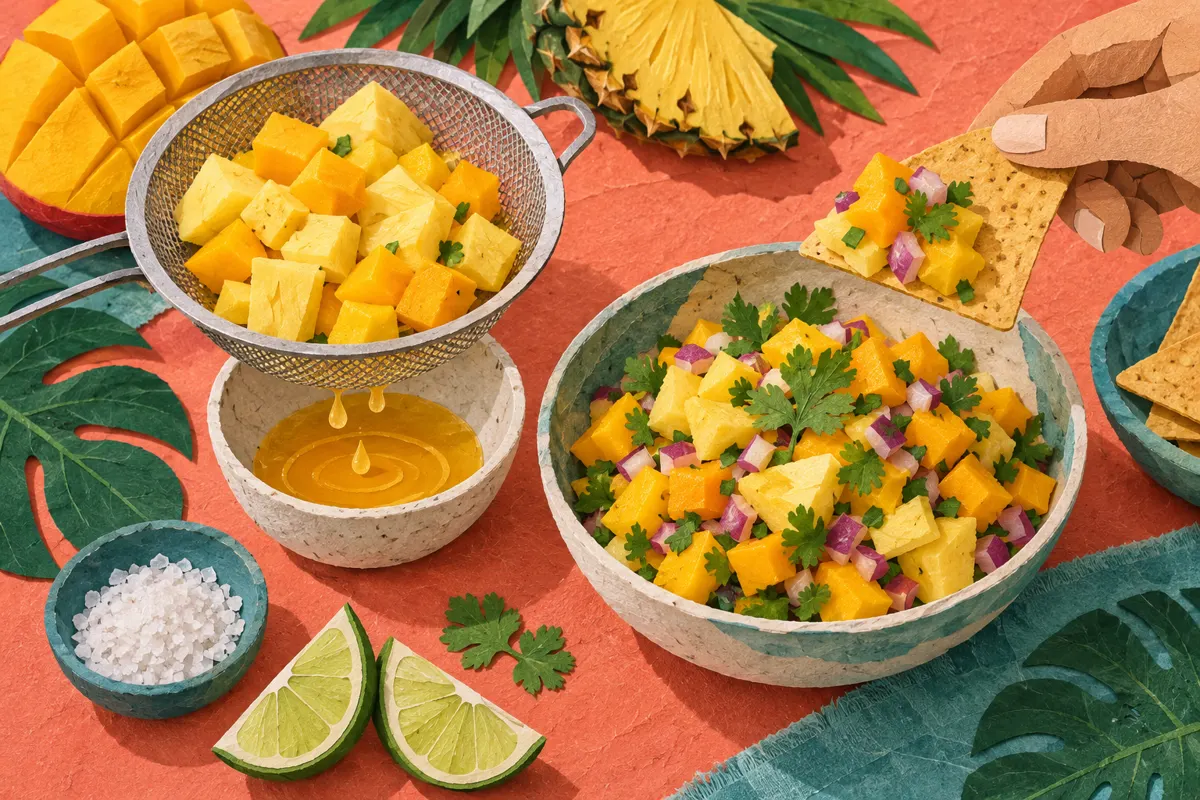
To keep mango or pineapple salsa easy to scoop, drain loose juice from the chopped fruit, stir gently, and add lime juice a little at a time near serving. For a gathering, prepare the components separately and assemble a small bowl first. Some liquid may still collect as salsa sits; draining it again is a reasonable fix. The workflow below is a practical proposal adapted from fruit-salsa preparation and general salsa advice, rather than a tested formula for tropical fruit.
Choose fruit that holds its shape
Start with the texture you want on the chip: distinct pieces of fruit with enough tenderness to eat comfortably. As a practical selection rule, choose mango flesh that you can cut into recognizable cubes. If it smears under the knife or collapses when moved, it will be harder to keep a chunky salsa neatly defined.
Use the same observation with pineapple. Look at the cut flesh and the juice collecting on the board instead of expecting every pineapple to behave identically. Drain noticeably juicy pieces before combining them with the other ingredients. If you have both firm and very soft fruit, reserve the softer portion for a blended preparation.
These are editorial selection suggestions. The supplied sources do not establish a ripeness scale for mango or pineapple, or prove that choosing firmer fruit guarantees a dry salsa. The useful checkpoint is whether your actual fruit holds its shape during preparation.
Cut for the chip, then drain gently
The supplied tropical fruit recipe recommends finely diced pieces so the mixture has a salsa texture and fits on a chip. Aim for small, fairly even pieces that let a scoop include fruit and seasoning together. There is no supported exact measurement here; your chips and the firmness of the fruit are useful guides.
For this chunky version, the proposed approach is to cut by hand and stop once the pieces are manageable. Avoid repeatedly chopping fruit that is already soft. The original fruit recipe allows a manual food processor, but also notes that the resulting pieces may be less uniform.
Transfer the diced fruit to a strainer over a bowl and let loose juice drip away while you prepare the remaining ingredients. Do not press or squeeze the pieces: the goal is to collect free liquid while keeping the fruit intact. This is an adaptation of the general salsa guide’s advice to drain excess liquid, not a source-tested pineapple or mango technique.
Add salt and citrus near serving
Lime juice brings flavor and also adds liquid to the bowl. Add a little, fold gently, and taste before adding more. The general salsa guide supports using citrus in moderation or omitting it, but does not establish that citrus causes tropical fruit to shed water.
The proposed serving strategy is to hold salt and citrus separately until the fruit has drained and you are ready to assemble a bowl. This lets you judge seasoning against the texture you will actually serve. It also avoids seasoning juice that you immediately pour away.
Treat late salting as a practical workflow choice. The supplied evidence does not test whether it keeps mango or pineapple salsa drier. Taste with the chip you plan to serve, particularly if it is salted, and make small adjustments. For a gathering, keep some prepared components refrigerated and replenish the serving bowl in batches.
Use a simple prep-and-assembly sequence
This proposed sequence works with mango, pineapple or a mixture. Onion, fresh herbs and chile are optional choices for a savory version. Keep their amounts flexible so you can adjust the bowl to your fruit and your guests.
- Dice the fruit into small, recognizable pieces. Transfer it to a strainer set over a bowl to collect loose juice.
- Prepare any onion, herbs or chile separately. Keep prepared components refrigerated while you finish the rest of the meal.
- When ready to serve, move a portion of drained fruit into a serving bowl and add your chosen extras.
- Fold gently, then add a little lime juice and salt. Taste with a chip before adjusting either.
- Lift a spoonful and check the bowl underneath. If liquid forms a noticeable pool, spoon it off or briefly strain the mixture without pressing.
- Serve cold and assemble another small batch when needed, checking its texture before adding more citrus.
Judge success by a practical chip test: can you lift a spoonful onto a chip without carrying a puddle with it? A little moisture is compatible with salsa. The general guide acknowledges that juice can collect after sitting, so a bowl that needs occasional draining has not necessarily gone wrong.
- Distinct pieces with liquid underneath: remove the pooled juice and taste again.
- Good texture but too much lime flavor: try folding in additional drained fruit, then reassess.
- Fruit that has become mashed: consider serving it as a spoonable fruit topping rather than trying to restore cubes.
Give the extra juice another job
Keep the collected juice separate from the serving bowl. Pouring it back into a salsa you have just drained would undo the texture adjustment. The following are suggested uses, with the choice depending on whether the juice came from plain fruit or an already seasoned mixture.
- Plain mango or pineapple juice: add a small amount to sparkling water or a smoothie.
- Juice containing lime, onion or chile: try a little in a dressing for a separate salad.
- Lightly seasoned juice: spoon a small amount over an individual rice bowl or taco when extra moisture is welcome.
Taste before choosing a use. Juice drained after seasoning may carry salt, heat and acidity as well as sweetness. Refrigerate it while deciding how to use it; these suggestions do not establish a storage life. Keep the salsa itself focused on the pieces of fruit that make each scoop satisfying.
Questions and answers
Can I prepare fruit salsa ahead of time?
A practical proposal is to prepare and refrigerate the components separately, then drain and assemble them near serving. The sources do not establish an ideal advance-preparation window for mango or pineapple salsa.
Should I add cornstarch to watery fruit salsa?
The supplied sources do not support cornstarch as a fix for fresh fruit salsa. For a chunky bowl, first remove pooled liquid gently and reassess the texture.